Crusher : A versatile machine for multiple applications
A crusher is a machine designed to reduce large rocks into smaller rocks, gravel, sand or rock dust.
Crushers may be used to reduce the size, or change the form, of waste materials so they can be more easily disposed of or recycled, or to reduce the size of a solid mix of raw materials (as in rock ore), so that pieces of different composition can be differentiated. Crushing is the process of transferring a force

amplified by mechanical advantage through a material made of molecules that bond together more strongly, and resist deformation more, than those in the material being crushed do. Crushing devices hold material between two parallel or tangent solid surfaces, and apply sufficient force to bring the surfaces together to generate enough energy within the material being crushed so that its molecules separate from (fracturing), or change alignment in relation to (deformation), each other. The earliest crushers were hand-held stones, where the weight of the stone provided a boost to muscle power, used against a stone anvil. querns and mortars are types of these crushing devices.

The following table describes typical uses of commonly used crushers:
| Type | Hardness | Abrasion limit | Moisture content | Reduction ratio | Main use |
|---|---|---|---|---|---|
| Jaw crushers | Soft to very hard | No limit | Dry to slightly wet, not sticky | 3/1 to 5/1 | Heavy mining, quarried materials, sand & gravel, recycling |
| Gyratory crushers | Soft to very hard | Abrasive | Dry to slightly wet, not sticky | 4/1 to 7/1 | Heavy mining, quarried materials |
| Cone crushers | Medium hard to very hard | Abrasive | Dry or wet, not sticky | 3/1 to 5/1 | Quarried materials, sand & gravel |
| Compound crusher | Medium hard to very hard | Abrasive | Dry or wet, not sticky | 3/1 to 5/1 | Mine, building materials |
| Horizontal shaft impactors | Soft to medium hard | Slightly abrasive | Dry or wet, not sticky | 10/1 to 25/1 | Quarried materials, sand & gravel, recycling |
| Vertical shaft impactors (shoe and anvil) | Medium hard to very hard | Slightly abrasive | Dry or wet, not sticky | 6/1 to 8/1 | Sand & gravel, recycling |
| Vertical shaft impactors (autogenous) | Soft to very hard | No limit | Dry or wet, not sticky | 2/1 to 5/1 | Quarried materials, sand & gravel |
| Mineral sizers | Hard to soft | Abrasive | Dry or wet and sticky | 2/1 to 5/1 | Heavy mining |
| Crusher buckets | Soft to very hard | No limit | Dry or wet and sticky | 3/1 to 5/1 | Heavy mining, quarried materials, sand & gravel, recycling |
Application areas of Crusher
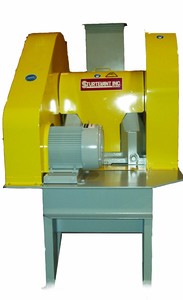 Crushers are used in the mining, metallurgical, construction, chemistry, petrochemical, transportation, and energy industries.
1. Construction: Crushers are widely used in construction to break down and crush materials such as concrete, asphalt, and rocks.
2. Mining and quarrying : Crushers are used in mining operations to crush and process various ores and minerals, including coal, copper, iron, gold, and more. Crushers are commonly used to reduce the size of large rocks and ores in mining and quarrying operations.
3. Construction : crushers are used to crush construction waste, concrete, and other materials for reuse in construction projects.
4. Landscaping: Crushers can also be used to break down and level pieces of landscaping materials such as stone, pebbles, and bark.
5. Recycling: Crushers are used in both commercial and residential recycling operations to crush materials such as glass, aluminum, electronics, plastic, and more.
6. Manufactured sand : crushers are commonly used to produce consistent sand and stone sizes for a variety of applications, including road construction, driveways, and landscaping.
For further details contact us on :Abhishek EnterprisesMob. - +91-9911218421Email: mehta@aecrushers.com


Comments
Post a Comment